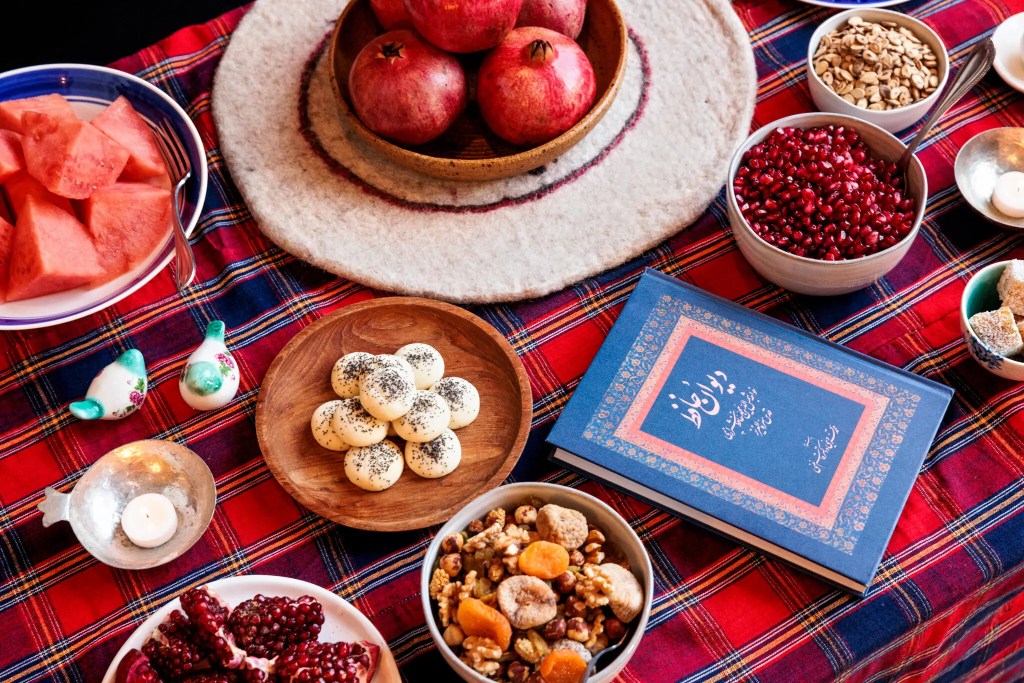
When the darkness takes over everything, when hearts start to surrender, and you feel as if you are being swallowed by darkness… light appears… it drops on your heart, darkness disappears, and the sun starts to shine again.
The longest night of the year is a big celebration in Iranian culture. This is the time when families get together and try to pass this dark and long night with the warmth and the strength of “being together”.
What is Yalda?
Yalda Night (Shab-e Yalda in Persian) is one of the ancient Persian celebrations, celebrating the longest night of the year (20th or 21st December, the last day of autumn in Persian Calendar). During this night, families gather, usually dressed in red, and stay awake until dawn to show they are strong together and are able to overcome any darkness and hardship when they are united.
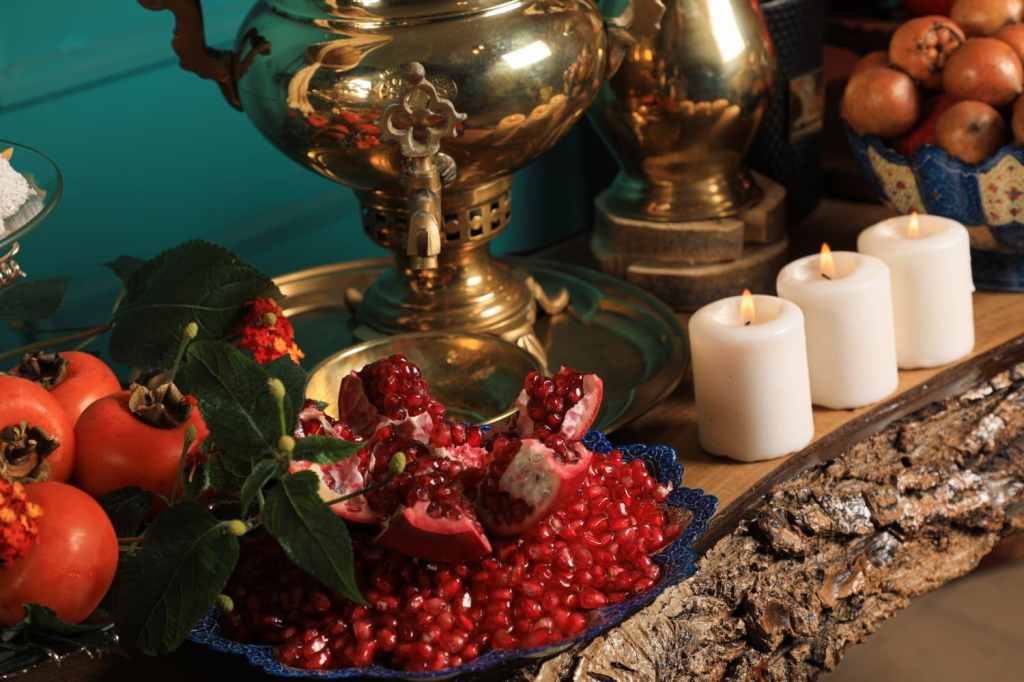
Photo credit: Orient Trips
They enjoy fruits, typically pomegranates, watermelon, and persimmon, and reading poetries, especially Hafez and Shahnameh, to welcome the sun and longer days. Yalda is the time of hope and renewal for Iranians.
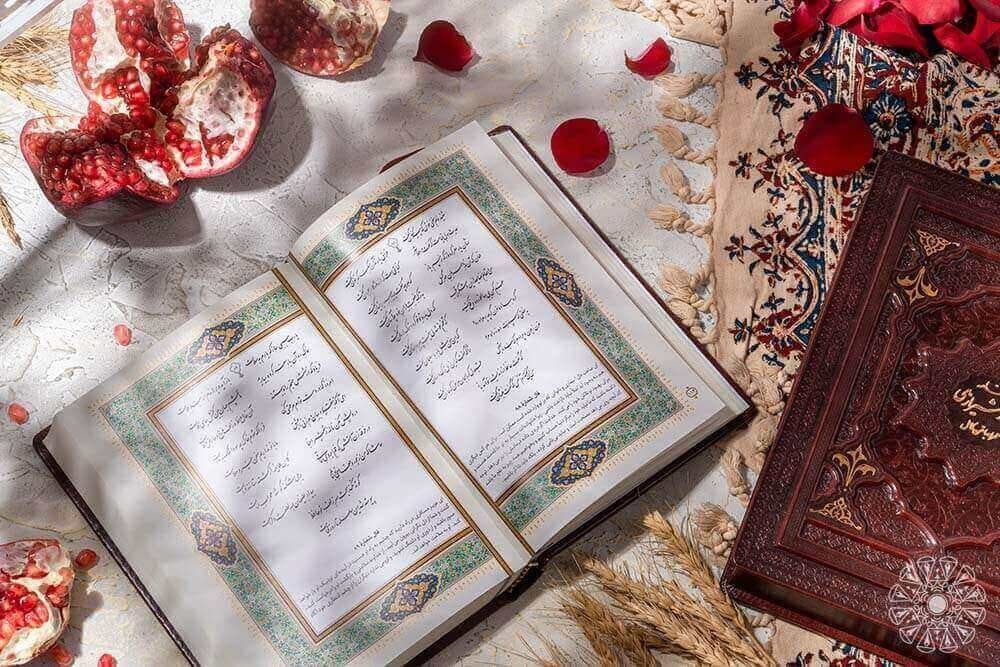
Yalda Night was one of the holy nights in ancient Iran and was included in the official calendar of the Iranian Achaemenid Empire from at least 550 BCE.
What Happens on Yalda Night Astronomically?
Astronomically, Yalda Night is the Winter solstice, the longest night and shortest day of the year in the Northern Hemisphere.

The winter solstice is the shortest day and longest night of the year, happening when Earth’s tilted pole is farthest from the sun, usually around December 21st in the Northern Hemisphere, marking the start of winter and a turning point where days begin to get longer again.
This is the time of gradual return of longer days and the sun’s increasing strength, symbolizing the victory of light over darkness, a moment of renewal and hope in ancient Persian tradition.
Who is Mitra?
Mitra (Mithra/Mehr = Sun, Kindness) is the ancient Persian god of light, truth, and contracts (usually is with Varuna, the god of oceans, rain, and water), whose birth is celebrated during Yalda.
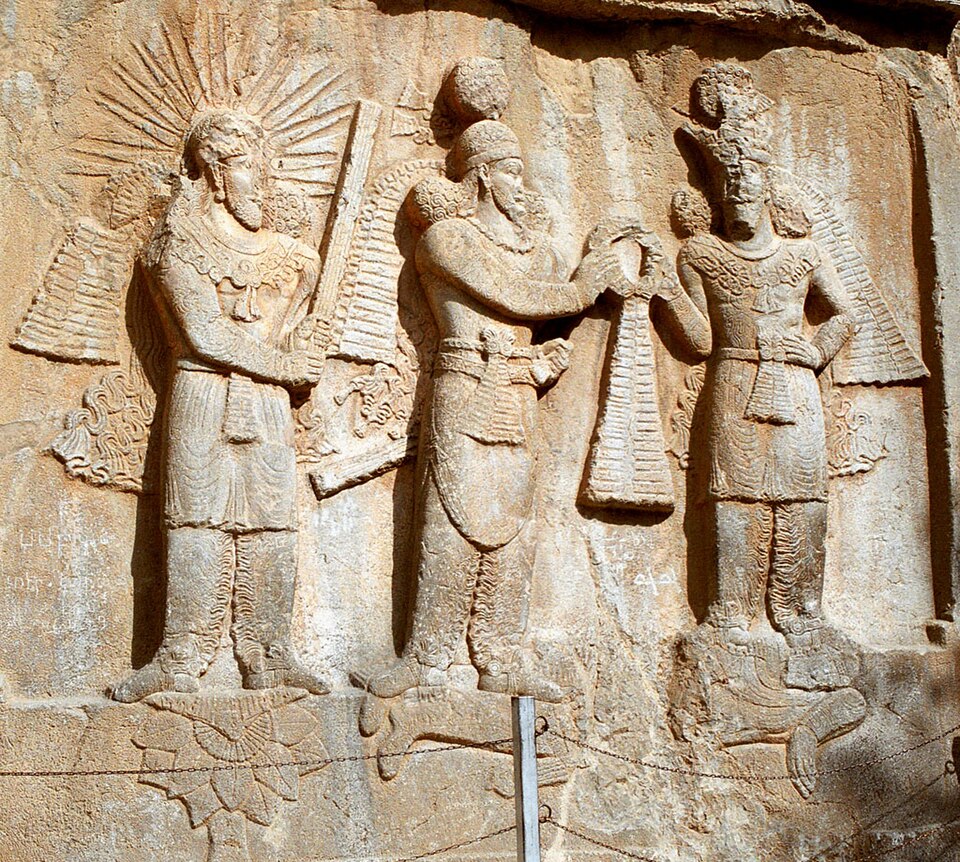
Ardashir II in the middle, to his right is Shapur II, to the left of the king, the god Mithra, with beams of light like the sun emanating from his head in all directions, and he is standing on a sacred lotus flower.
Photo and information credit: Wikipedia
So, Yalda is also the time for honoring Mitra’s emergence as the sun begins its return, bringing hope, warmth, and longer days.
Light Overcomes Darkness!

Yalda is promising light comes, and it always overcomes darkness, even if the night is long. We get together to remember that darkness will disappear and the sun rises again, we remember that each of us carries light and warmth within our heart. When we come together, we create a safe and warm halo around ourselves, which protects us against the demons of darkness.
Light always overcomes darkness!
 Wild Me
Leave a comment