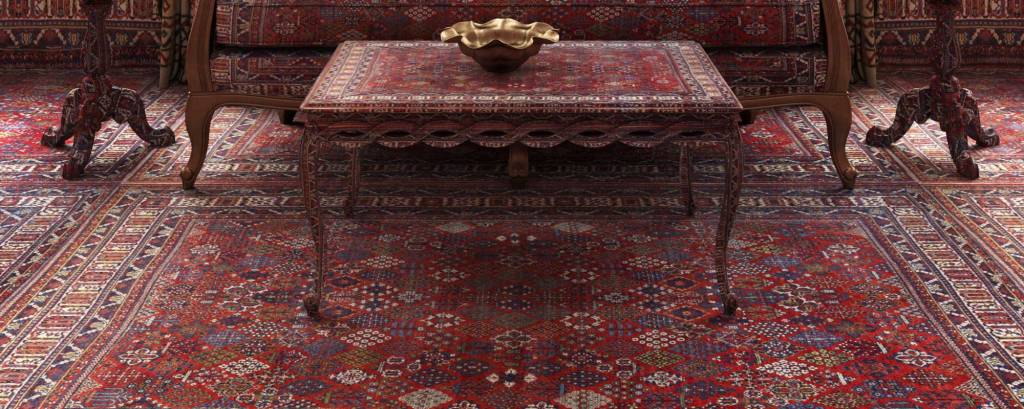
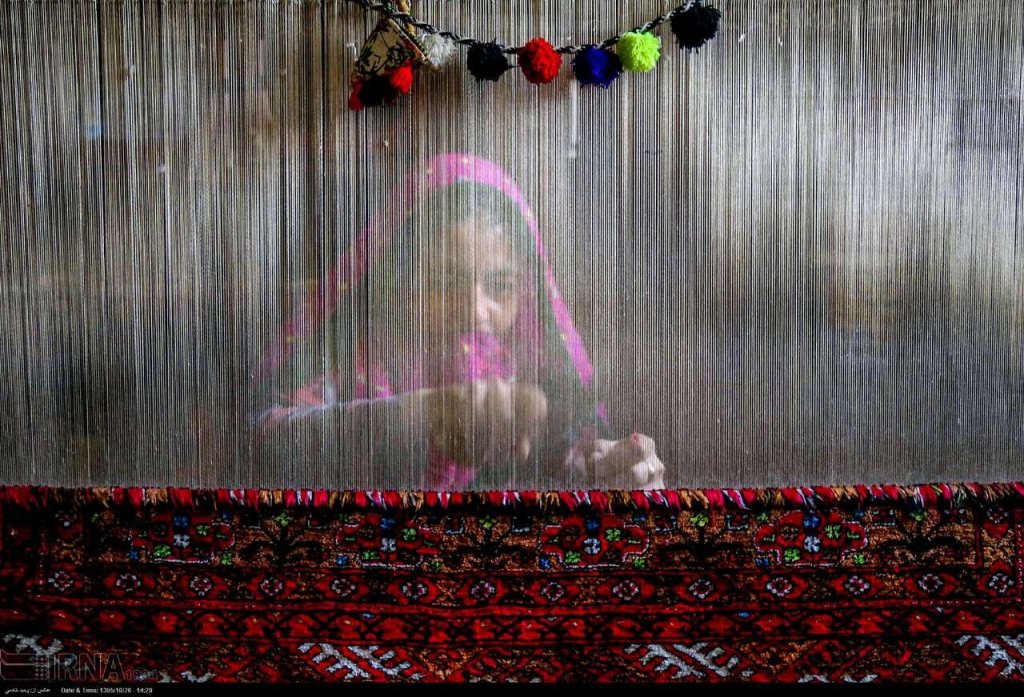
For centuries, Iran has been known for its beautiful carpets around the world. In all the ups and downs of that ancient land, the Persian carpet, more than anything else, could keep alive the Iranian identity, culture, and history, and introduce them to the world. Persian carpet, like an ambassador, travels city by city, passing through the lands and shows itself to the world. Behind every single pattern and color there are many stories. Persian carpet has come a long way to get here, and now, it has many beautiful stories from its long journey, long journey as long as Iran’s history. Let’s sit and listen to the Persian carpet’s stories…
The Pazyryk Carpet
First let’s have a short trip to the Altai Mountains in Russia…
In 1949, Sergei Rudenko, a Russian archaeologist, discovered an old carpet during excavations in Pazyryk Valley, Altai Mountains, southern Siberia. The carpet, along with some wooden objects, textiles, chariot and horse skeleton, was buried under a thick layer of ice underground. Studies conducted on the Pazyryk Carpet so far show that it was woven between 5th to 3rd centuries BC.
But what about the Pazyryk’s origin?
The studies show that the patterns of the Pazyryk carpet are inspired by Achaemenid Persian art. Moreover, the weaving, tying, and dyeing techniques present more evidence for the link between the Pazyryk carpet and Persian carpets.
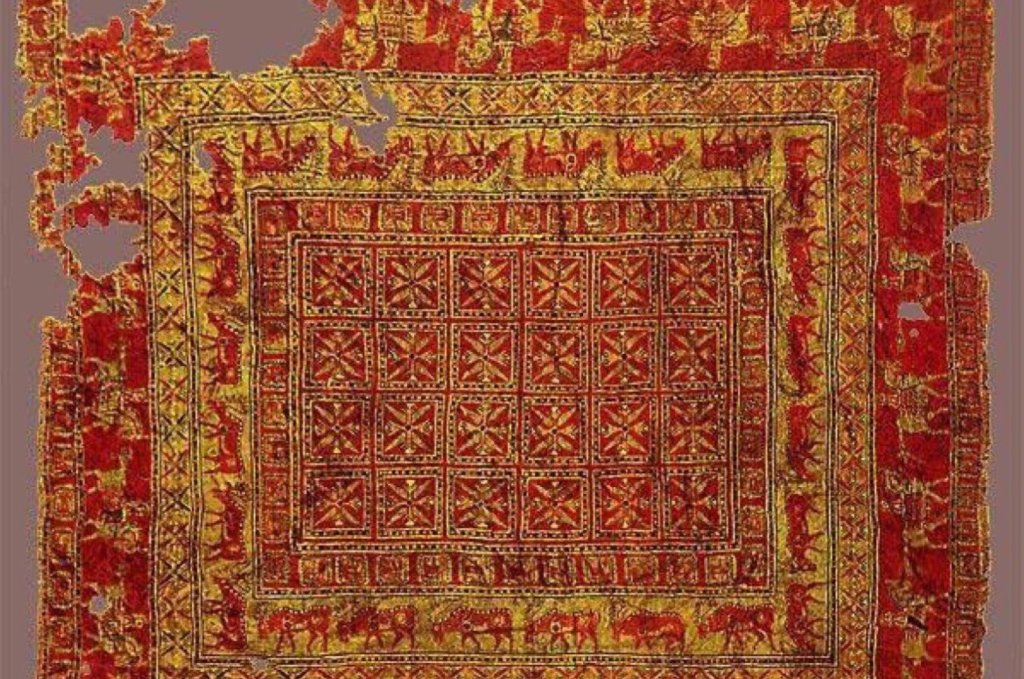
Photo credit: Daily Sabah
On the other hand, the ancient carpet weaving tools, which have been discovered in Bronze Age graves in Turkmenistan and northern Iran, also in Kamfiruz, central Iran, show more connections between the Pazyryk carpet and Persian carpets.
Although this issue is still under research, there is strong evidence that the Pazyryk carpet was probably woven in Iran. But Armenia and Central Asia are the other probable origins of this world’s oldest discovered carpet.
The blooming of Persian rug
In Iran, carpets have been woven for more than 2500 years, but that was in the Safavid dynasty, between 1501 to 1736, that carpet weaving, like other Iranian arts, experienced a flourish era. During this time, in addition of using more modern tools and knotting techniques, new patterns also emerged; rural and simple patterns gave their place to abstract and Islamic motifs. Moreover, that was in this period that carpet weavers started to use modern colors, like pink and yellow, for the first time.
The centers of carpet weaving in Iran
High-quality and durable carpets are woven in different regions in Iran, among the most famous carpet weaving centers we can name Tabriz, Isfahan, Kashan, Mashhad, Kurdistan, Kerman, and Chahar-Mahal-O-Bakhtiari.

Photo credit: percarin
According to the climate, in access materials and cultural roots, weavers use specific materials, but sheep wool, cotton, and silk are the most common materials for weaving carpets.
Nature’s soul in Persian carpets
Artisans use natural or chemical colors for dyeing carpets, and of course, this is the natural colors that bring deeper sense and softer shades to the carpet. In Iran, madder root is used to get deep red to reddish-brown, pomegranate rind for yellowish brown and olive green, vine leaves for dark brown and greenish tones. Also, from parts of the kermes insect they get brick red and from blue indigo they get very beautiful azure.
Listen! It talks…
Persian carpet, like an old beautiful garden full of memories and stories, has many secrets to reveal… from unrequited loves of young weaver girls, who knotted their secrets on the carpets… to unspoken mysteries of women… from men’s conquests in hunting grounds… to praise the sun, life, and nature Persian carpet has many stories to say.

Photo credit: The Wall Street Journal
So, the next time, when you see that beautiful garden under your feet, take a moment to sit and look at it more closely… look at the colors, follow the patterns that go up and come down, turn and mix together… let yourself get lost among them… and then, you hear the whispers…
This passage comes from a longer introduction to Persian carpets, originally published in Persian language, on Nabro, an Iranian tourism website, in 2019. The website ceased operations in 2020 following the COVID-19 pandemic.
 Wild Me
Leave a comment